Why Is My Check Engine Light On?
Your check engine light can turn on for something as simple as a loose gas cap or for a more serious problem such as an engine misfire. The light means your vehicle’s onboard diagnostic system has detected a fault involving the engine, emissions system, or—in some vehicles—the transmission.
The important question is whether the check engine light is steady or flashing.
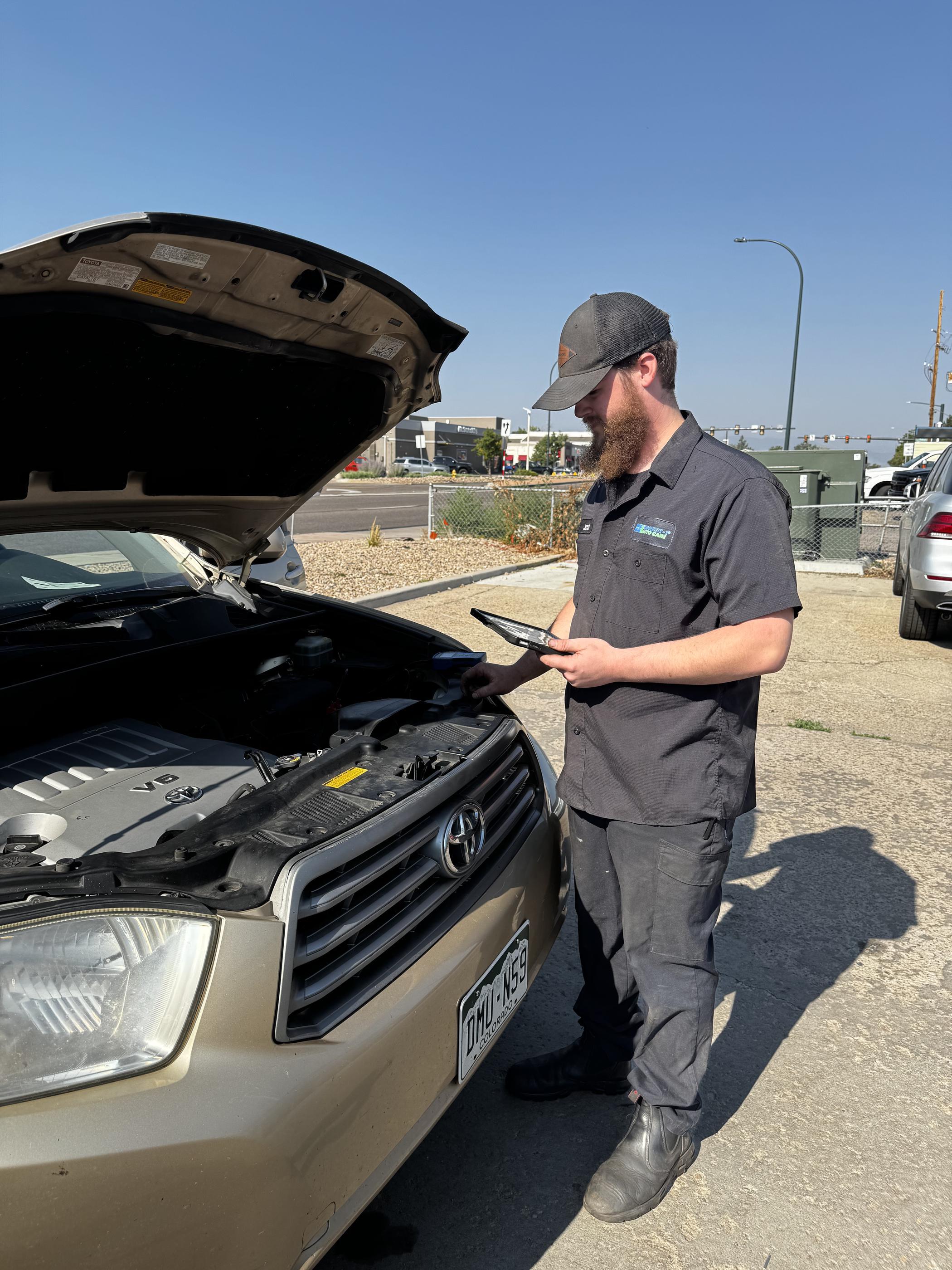
Is It Safe to Drive With the Check Engine Light On?
Steady check engine light
If the light is steady and the vehicle is running normally, you can usually drive a short distance to have it checked. Do not ignore it, however. A problem that seems minor can affect fuel economy, emissions, drivability, or other components if it is left unresolved.
Check that your gas cap is properly tightened. If the light remains on, schedule a diagnostic inspection with a qualified auto mechanic.
Flashing check engine light
A flashing check engine light requires prompt attention. It commonly indicates a severe misfire that may damage the catalytic converter. Reduce your speed, avoid hard acceleration, and pull over safely. If the engine is shaking, losing power, overheating, or making unusual noises, turn it off and arrange for a tow.
Always follow the instructions in your vehicle owner’s manual, since warning-light guidance can vary by make and model.
Common Reasons Your Check Engine Light May Be On
The warning light does not identify one specific repair. It tells the technician that the vehicle’s computer has detected a problem and stored one or more diagnostic trouble codes. Possible causes include:
1. Loose, damaged, or missing gas cap
A fuel cap that is loose or no longer seals properly can allow fuel vapor to escape and may trigger an evaporative-emissions code. Tighten the cap until it is secure. If the cap or seal is damaged, it may need to be replaced.
2. Engine misfire
A misfire occurs when one or more cylinders do not burn the air-fuel mixture properly. Possible causes include worn spark plugs, a failed ignition coil, a fuel-delivery problem, an air leak, or an internal engine issue. You may notice shaking, rough idling, hesitation, or reduced power.
3. Oxygen-sensor problem
Oxygen sensors monitor the exhaust and help the engine computer adjust the air-fuel mixture. A faulty sensor—or another condition that causes an abnormal sensor reading—can turn on the check engine light.
4. Catalytic-converter efficiency problem
The catalytic converter helps reduce harmful exhaust emissions. A converter-efficiency code does not automatically mean the converter should be replaced. Misfires, fuel-control issues, exhaust leaks, sensor problems, and other faults must be considered before recommending a repair.
5. Evaporative-emissions system leak
The EVAP system is designed to prevent fuel vapors from escaping into the atmosphere. A leaking hose, faulty valve, damaged fuel cap, or other small leak can cause the check engine light to come on even when the car appears to drive normally.
6. Air-intake or fuel-control problem
A dirty or faulty airflow sensor, vacuum leak, fuel-pressure problem, or contaminated fuel can interfere with the engine’s ability to maintain the correct air-fuel mixture.
7. Electrical, wiring, or battery-voltage issue
Damaged wiring, corroded connections, weak system voltage, or a failing electrical component can create inaccurate readings or interrupt communication between vehicle systems.
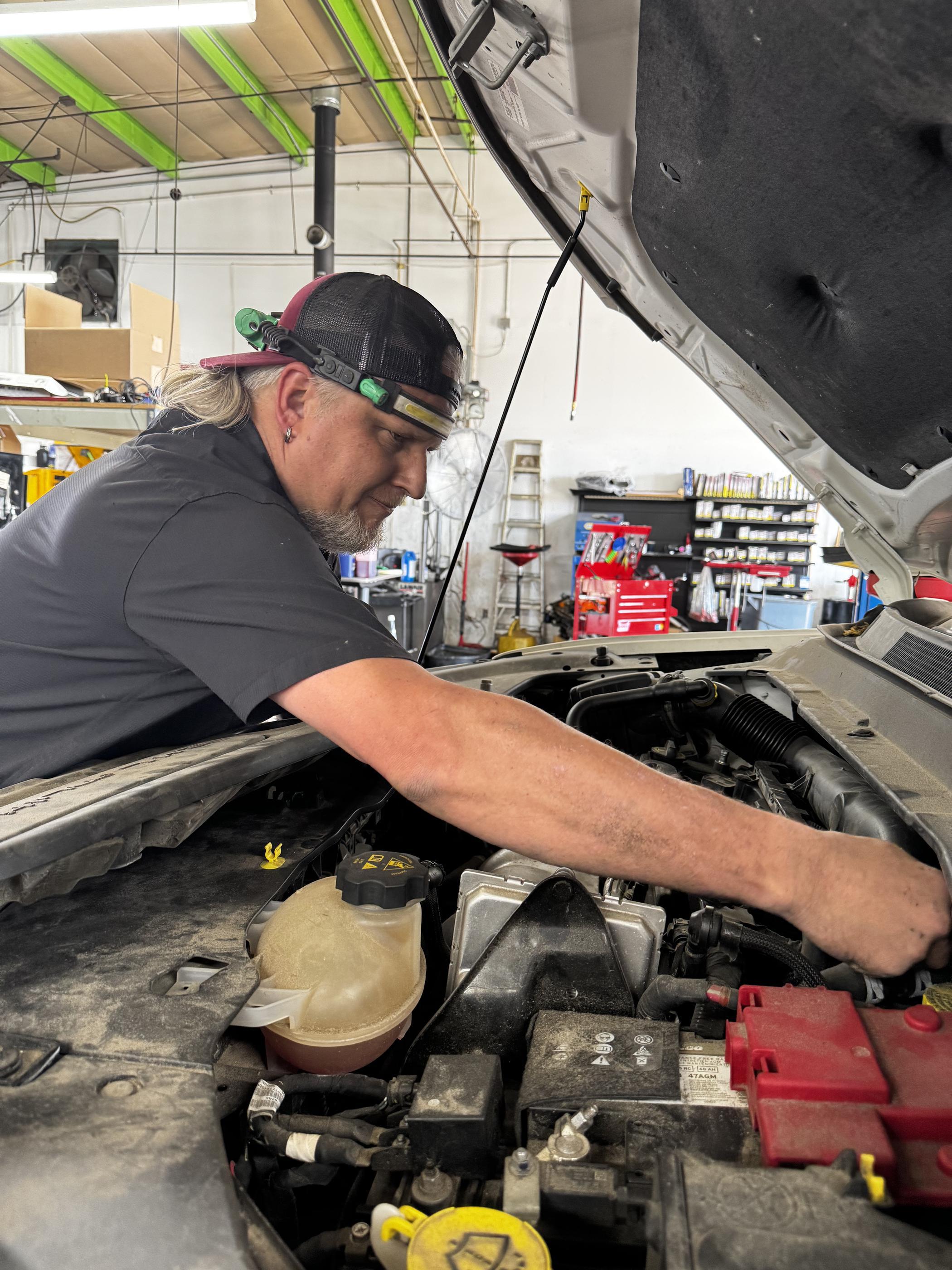
Why Reading the Code Is Not the Same as Diagnosing the Problem
An inexpensive code reader can identify the system in which the computer detected a fault, but a trouble code does not necessarily identify the failed part.
For example, an oxygen-sensor code could be caused by the sensor itself, but it could also result from damaged wiring, an exhaust leak, a vacuum leak, or an engine running too rich or too lean. Replacing a part based only on a code can waste money and leave the real problem unresolved.
A proper check engine light diagnosis may include:
- Scanning all relevant vehicle modules and documenting stored, pending, and history codes
- Reviewing freeze-frame and live operating data
- Inspecting wiring, hoses, connectors, and related components
- Testing the affected system
- Confirming the cause before recommending a repair
What Should I Do When the Check Engine Light Comes On?
- Notice how the car is running. Pay attention to shaking, stalling, loss of power, unusual smells, smoke, overheating, or abnormal sounds.
- Determine whether the light is steady or flashing. A flashing light needs immediate attention.
- Check the gas cap. Make sure it is present, undamaged, and fully tightened.
- Do not erase the code before the appointment. Clearing codes can remove information that helps the mechanic identify the cause.
- Schedule a diagnostic inspection. Early diagnosis may prevent a drivability problem from causing additional damage.
Check Engine Light Diagnosis in Federal Heights, Colorado
If you are searching for a mechanic in Federal Heights, an auto mechanic near me, or check engine light diagnosis near me, Honest‑1 Auto Care Federal Heights can help.
Our team will inspect the vehicle, review the diagnostic information, test the affected system, and explain what we find before recommending repairs. Our goal is to identify the cause—not simply replace the part named in a trouble code.
Call Honest1 Auto Care Federal Heights at 303-426-8610 to schedule a check engine light diagnostic appointment.
Frequently Asked Questions
Why did my check engine light come on if my car runs fine?
Some faults affect emissions or fuel-vapor controls before they cause noticeable driving symptoms. A loose gas cap, a small EVAP leak, or a sensor-related fault may illuminate the light even though the vehicle seems normal.
Will a check engine light turn off by itself?
It may turn off after the computer no longer detects a temporary problem for a specified number of driving cycles. The code may remain stored, however, and a light that returns should be diagnosed.
Can cold or hot weather cause a check engine light?
Temperature changes can expose a weak battery, marginal electrical connection, small emissions-system leak, or other developing fault. Weather itself is not a diagnosis; the stored codes and system tests are needed to find the actual cause.
Can I drive with a steady check engine light?
If the light is steady and the car is operating normally, you can generally drive cautiously for a short distance to obtain service. Stop driving if the light begins flashing or the vehicle shakes, loses power, overheats, smokes, or shows another serious warning.
How much does check engine light diagnosis cost?
The cost depends on the vehicle and the testing required. Reading a code is only the first step; an accurate estimate should reflect the time and equipment needed to identify the underlying fault.
Can an auto-parts store diagnose my check engine light?
Many parts stores can read a trouble code. That information can be useful, but it usually does not establish which component failed or why the code was set. A trained mechanic may need to inspect and test the system before recommending a repair.
Sources
- U.S. Environmental Protection Agency: Evaluation of On-Board Diagnostic System Effectiveness
- National Highway Traffic Safety Administration: Manufacturer owner-manual material describing OBD-II and the service-engine-soon light
- Federal Trade Commission: Auto Repair Basics