Why Do Auto Repair Shops Charge for Diagnostics? And Why Is It Worth It?
You’re driving along when the check engine light comes on. Maybe your car starts making a strange noise, won’t start, runs rough, or the air conditioning suddenly stops blowing cold.
You take it to an auto repair shop and hear:
“We’ll need to diagnose the problem first.”
Then comes the question we hear all the time:
Why do I have to pay for diagnostics if I’m already going to pay for the repair?
It’s a fair question.
At Honest1 Auto Care Federal Heights, we believe you should understand what you’re paying for. A proper automotive diagnosis isn’t simply plugging a scanner into your car and reading a code. It’s the process of determining what is actually wrong with your vehicle before recommending a repair.
A Trouble Code Is Not a Diagnosis
Modern vehicles contain dozens of computers, sensors, modules, wiring circuits, and electronic components. When your check engine light comes on, a scan tool may retrieve a diagnostic trouble code.
But that code usually identifies where the vehicle detected a problem—not necessarily which part needs to be replaced.
For example, a trouble code involving an oxygen sensor doesn’t automatically mean the oxygen sensor is bad. The actual cause could be a wiring problem, vacuum leak, exhaust leak, fuel-delivery issue, or another component affecting the sensor’s readings.
Replacing a part based only on a trouble code can become an expensive guessing game.
Good diagnostics answer a different question: Why did the code appear in the first place?
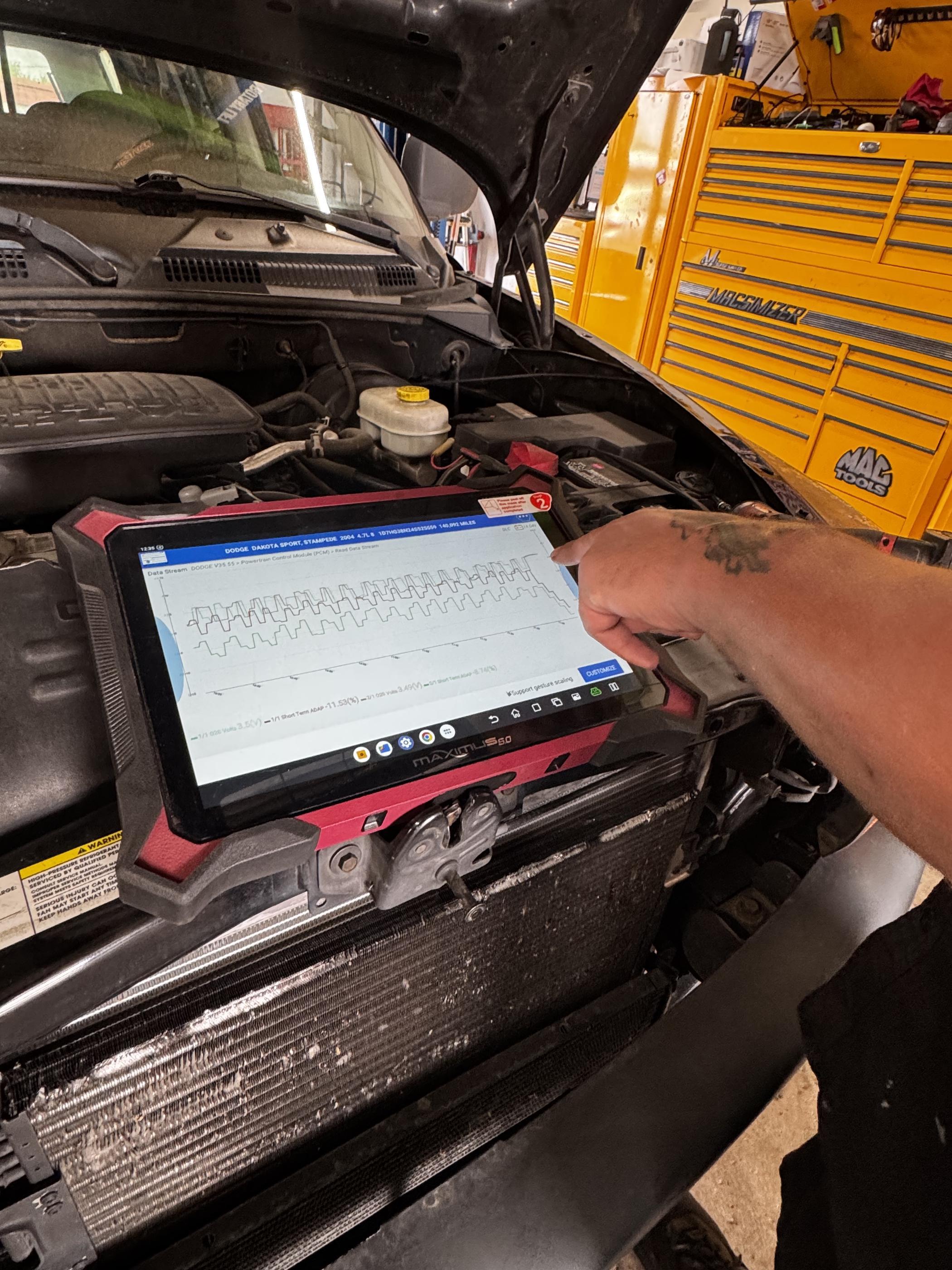
What Are You Paying for With Automotive Diagnostics?
When you pay for professional automotive diagnostics, you are paying for much more than the use of a scan tool.
Depending on the problem, diagnosis may include:
- Interviewing you about the symptoms and when they occur
- Performing an initial visual inspection
- Scanning the vehicle's computer systems
- Reviewing trouble codes and live vehicle data
- Testing electrical circuits, sensors, and components
- Checking wiring and connections
- Performing voltage, pressure, vacuum, smoke, or other specialized tests
- Researching manufacturer service information and specifications
- Reproducing an intermittent problem
- Having an experienced technician interpret all of that information
The tools provide information.
The technician has to figure out what that information means.
Why Experience Matters
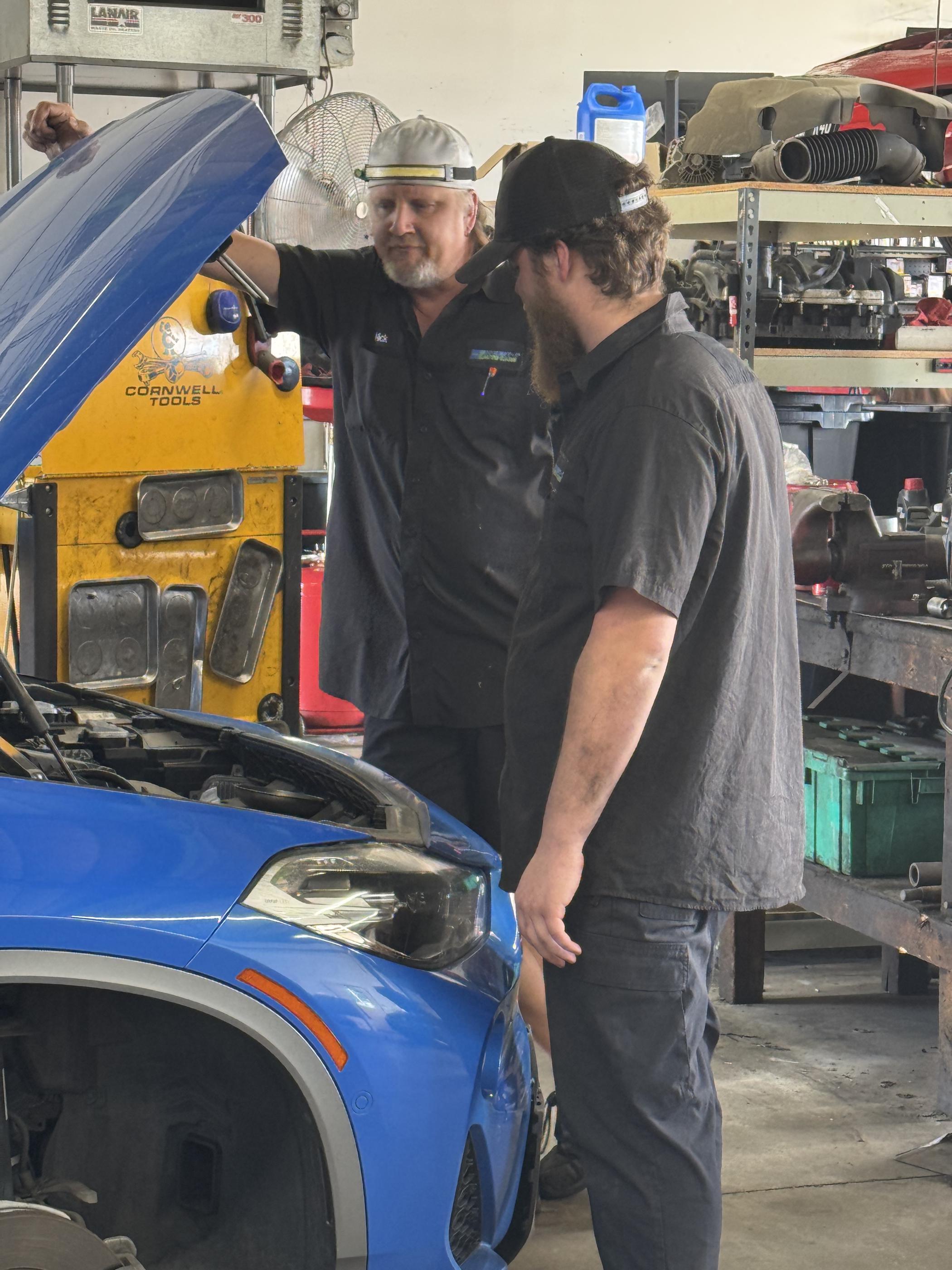
A professional automotive technician develops diagnostic skills through years of training and hands-on experience.
Two vehicles can have similar symptoms and require completely different repairs.
A car that won’t start could have a battery problem, starter problem, charging-system issue, wiring fault, fuel problem, ignition problem, security-system issue, or computer-related failure.
Finding the correct cause takes knowledge and a systematic testing process.
That expertise has value—just like the expertise of any other trained professional.
Diagnostics Can Actually Save You Money
Paying for diagnosis before authorizing a repair can seem like an additional expense.
In reality, proper diagnosis can prevent a much larger one.
Consider the alternative:
Replace a part. Problem remains. Replace another part. Problem remains. Try something else.
You may end up paying for several parts that your vehicle never needed.
A careful diagnosis is designed to identify the underlying problem so you can make an informed decision about the repair.
We would rather spend time testing than spend your money guessing.
What About the Free Code Scan at an Auto Parts Store?
A free code scan can be useful. It can tell you which diagnostic trouble codes are stored in your vehicle.
But retrieving a code and diagnosing a vehicle are two different things.
Think of the code as a clue.
Professional diagnosis involves determining why that code was triggered and whether the component named in the code—or something else entirely—is causing the problem.
That distinction can save you from replacing perfectly good parts.
Not Every Diagnostic Problem Is Easy
Some problems can be identified relatively quickly. Others take considerably more time.
Intermittent electrical problems are a good example. If your vehicle only acts up occasionally, the technician may need to recreate the exact conditions under which the failure occurs.
That takes time.
And sometimes the first round of testing narrows the problem down but additional testing is needed before anyone can responsibly recommend a repair.
We believe that's better than guessing.
Our Approach at Honest1 Auto Care Federal Heights
When you bring your vehicle to Honest1 Auto Care Federal Heights, our goal isn't simply to sell you a part.
Our goal is to identify the problem, explain what we found, and give you the information you need to decide what to do next.
That's also why we use Digital Vehicle Inspections when appropriate. Photos and inspection information can help you better understand what our technicians are seeing.
We believe auto repair works better when the customer understands the why behind the recommendation.
Looking for Car Diagnostics or a Mechanic Near Federal Heights?
If your check engine light is on, your vehicle won't start, you hear an unusual noise, or something just doesn't feel right, don't start replacing parts based on guesses.
Have the problem properly diagnosed.
Honest1 Auto Care Federal Heights provides professional auto diagnostics and auto repair for drivers in Federal Heights, Westminster, Northglenn, Thornton, and the surrounding Denver metro area.
If you've been searching for “car diagnostics near me,” “check engine light diagnosis near me,” “auto repair near me,” or “mechanic Federal Heights,” we're here to help.
Find the problem first. Fix the right problem second.
That's what good diagnostics are all about.